
How to Protect Your Home from Wildfire Risk with Smart Landscape Design
Oregon’s sweeping forests and dry summer climate make it one of the most breathtaking places to live—but they also come with a growing wildfire risk. As summers become hotter and drier, wildfires are increasingly threatening communities across the state. For homeowners, this means taking action—starting right in the yard.
The good news? Thoughtful landscape design can be one of your best defenses. Firewise landscaping doesn’t mean sacrificing beauty—it means designing your outdoor space with both safety and aesthetics in mind. With the right plants, materials, and layout, you can lower your fire risk, protect your property, and give firefighters a better chance to defend your home when it matters most.
Why Firewise Landscaping Matters in Oregon
Wildfire season is no longer a distant worry—it’s a reality many Oregon homeowners face each year. In fire-prone regions, your landscape can be the first line of defense or the quickest path for fire to reach your home.
That’s where Firewise USA® comes in. This national program offers science-based guidance on how to protect your home through smart vegetation management, spacing, and materials. By following Firewise principles to prepare your home for wildfire, you’ll make informed decisions about fire safe landscaping that slows the spread of flames, creates defensible space, and improves access for emergency responders.

Understanding Home Ignition Zones
To apply firewise landscaping effectively, start by dividing your yard into Home Ignition Zones—each with its own strategy for reducing wildfire risk.
Immediate Zone (0–5 feet): Creating a Fire-Resistant Barrier
This zone is closest to your home, and the most important for protection.
- Use non-flammable materials like gravel, pavers, and stone near foundations
- Keep plants sparse and remove any that touch the house or overhang the roof
- Avoid wood mulch, firewood stacks, or flammable decor near exterior walls
Intermediate Zone (5–30 feet): Slowing Fire Spread
This zone helps slow fire before it can reach your home.
- Strategically space plants and trees to avoid “fuel ladders” that carry fire upward
- Use low-growing, fire-resistant plants with high moisture content
- Keep grass trimmed short and remove fallen leaves or plant debris regularly
Extended Zone (30–100 feet): Reducing Fuel for Wildfires
This outer zone is all about limiting intensity and keeping fire low to the ground.
- Choose native, drought-tolerant plants that are easy to maintain
- Thin out trees and prune lower branches to prevent flames from climbing
- Regularly clear out dead wood, brush, and excess vegetation
Key Firewise Landscaping Strategies
1. Select Fire-Resistant Plants
The best fire safe landscaping starts with the right plants—especially those native to Oregon. Look for species with low sap, high water content, and no oily or resinous leaves.
Fire-Resistant Native Oregon Plants:
Groundcovers & Perennials
- Kinnikinnick (Arctostaphylos uva-ursi)
- Yarrow (Achillea millefolium)
- Wild strawberry (Fragaria vesca)
- Aquilegia Formosa (Western Columbine)
- Armeria maritima (Sea thrift)
- Sword fern (Polystichum munitum)
- Dicentra Formosa (Western Bleeding Heart)
Shrubs
- Red flowering currant (Ribes sanguineum)
- Oregon grape (Mahonia aquifolium)
- Snowberry (Symphoricarpos albus)
- Salal (Gaultheria shallon)
Trees
- Vine maple (Acer circinatum)
- Serviceberry (Amelanchier alnifolia)
- Pacific dogwood (Cornus nuttallii)
Avoid highly flammable plants like junipers, arborvitae, eucalyptus, and tall ornamental grasses such as pampas grass. These species are prone to ignition because they are woody, resinous, contain volatile oils, have low moisture content, or accumulate fine, dry, and dead branches that act as fuel during a wildfire.
You’ll also find non-native plant options in this guide from OSU Extension.
2. Incorporate Fire-Resistant Hardscaping
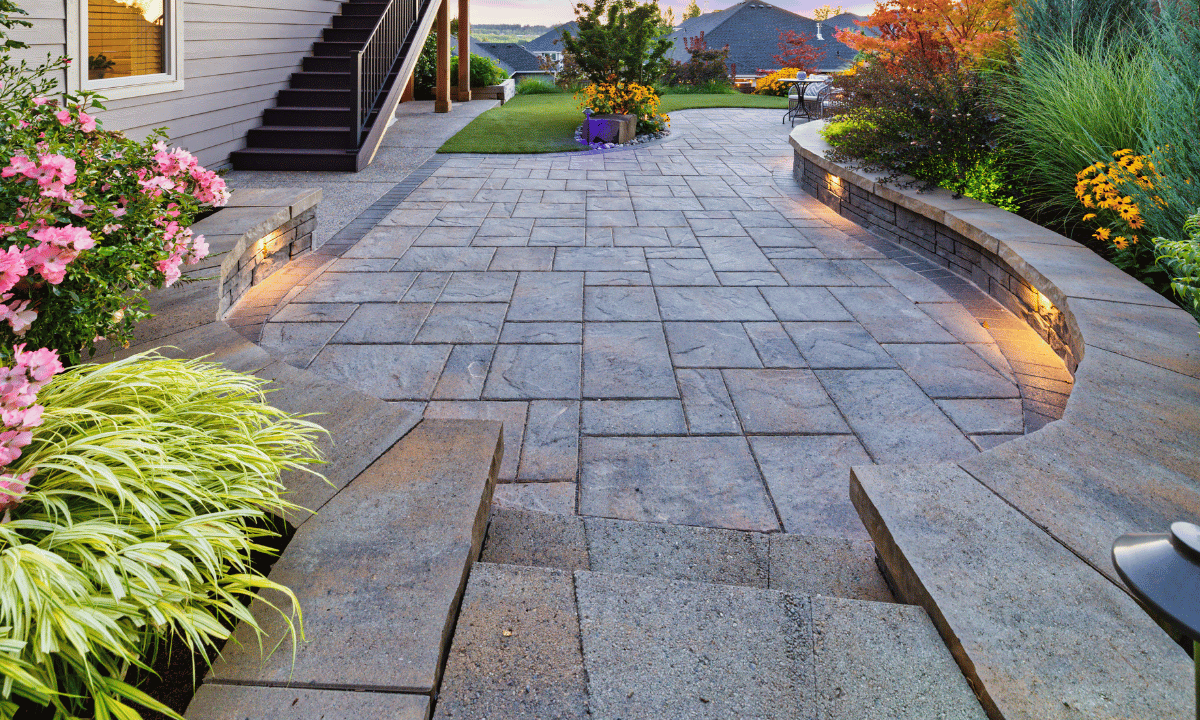
Hardscaping isn’t just attractive—it’s functional. Non-combustible materials can serve as firebreaks, helping contain or redirect flames.
Ideas for Fire-Resistant Hardscape Elements:
- Gravel or decomposed granite pathways & patios
- Stone patios or seating areas
- Concrete retaining walls
- Metal or stone garden edging
Use these elements to break up large planting areas and add both safety and structure to your design.
3. Maintain Proper Spacing and Pruning
Vegetation that’s overgrown or too dense provides fuel for fires. Smart spacing and consistent maintenance go a long way.
Maintenance Tips:
- Prune trees so branches stay at least 10 feet from your home and chimney
- Regularly clear out dead leaves, dry branches, and flammable debris
- Avoid “plant canopies” that touch each other—space trees and shrubs accordingly
- Mow lawns and remove invasive grasses that dry out quickly
- Keep combustible materials like compost station, brush piles, firewood away from the house
- Limb up conifer trees so that bottom branches are at least 6 ft from the ground to reduce chances that ground fire can ladder up into the trees
Our maintenance team can help keep your landscape well-groomed, safe, and firewise all season long.
4. Ensure Emergency Access
Even with the best firewise landscaping, firefighters need clear access to your home.
Access Essentials:
- Keep driveways wide and free from overhanging branches
- Clearly mark your address with reflective signage
- Ensure access to water (e.g., spigots, hoses, or nearby hydrants)
Firewise Landscaping: A Smart Investment in Safety
There’s no one-size-fits-all solution to protecting your home from wildfire, but firewise landscaping gives you a strong, proactive foundation. It’s not just about what you plant—it’s how you design, space, and maintain your yard. With some thoughtful planning and regular upkeep, your landscape can be both beautiful and defensible.
Final Tip: Remember that fire safe landscaping is an ongoing effort. As plants grow and conditions change, so should your maintenance routine. Stay alert, stay prepared, and stay safe.
Need Help Designing a Firewise Landscape?
If you’re ready to transform your yard into a fire-smart, low-maintenance space, the team at Blessing Landscapes is here to help. Our experts understand Oregon’s unique climate and can create a custom landscape design that blends beauty with fire prevention.
Contact us today to schedule a complimentary consultation and take the first step toward a safer, more resilient landscape.
