Climate change is reshaping the Pacific Northwest, and Portland is no exception. Longer summer droughts, more extreme heat days, intense winter rainstorms, and a rising risk of wildfire are shifting what our local landscapes need to stay healthy and resilient. For homeowners, these changes present both challenges and opportunities. By embracing sustainable landscaping practices, we can redesign our outdoor spaces to conserve water, support wildlife, strengthen soil, and withstand a more unpredictable climate.
Sustainable landscaping isn’t just a trend in Portland. It’s quickly becoming a necessity, and a powerful way for homeowners to make a positive environmental impact right at home.
How Climate Change Is Affecting Portland Landscapes
Portland’s climate is undergoing measurable shifts. According to climate data from Metro and the State of Oregon, the region can expect:
- More frequent and prolonged droughts in the summer
- Increasing heatwaves, including 90–100°F+ days that strain non-native plants
- Heavier winter rainfall, which contributes to flooding, erosion, and soil compaction
- Greater wildfire risk, especially in the wildland-urban interface and densely vegetated areas
- Shifting growing seasons, affecting plant establishment and long-term survival
These changes place stress on traditional landscaping approaches. Lawns require more water than ever. Non-native ornamentals struggle with temperature extremes. Poorly draining soils become waterlogged in winter yet bone-dry by midsummer. And thick, neglected vegetation can increase fire risk around the home.
As the local climate continues to shift, homeowners must rethink landscape design with an eye toward durability, ecological value, and long-term sustainability.
What Is Sustainable Landscaping?
Sustainable landscaping is an approach to landscape design that works with natural systems instead of against them. It emphasizes water efficiency, native plant selection, healthy soil, biodiversity, and the use of sustainable materials. The goal is to create landscapes that are beautiful, functional, low-impact, and resilient to environmental stressors.
To learn more about the philosophy behind these practices, explore our article on What Is Sustainable Landscaping?.
Core Principles of Sustainable Landscape Design
- Use native and climate-adapted plants
- Preserve and promote healthy soil
- Reduce water use through efficient irrigation and strategic plant layout
- Support biodiversity and wildlife habitat
- Reduce waste and use sustainable or recycled materials
- Design with long-term climate conditions in mind
With these principles as a guide, Portland homeowners can build landscapes that look great year-round, without putting unnecessary strain on natural resources.
Adapting Your Portland Yard With Sustainable Landscaping
1. Choose the Right Plants
Plant selection is the foundation of a climate-resilient landscape. Portland’s future climate will favor plants that can tolerate hotter, drier summers and rapid shifts between wet and dry periods.
Prioritize Native Plants
Native plants are naturally adapted to our region’s conditions, which makes them better suited for long-term survival as the climate changes. They typically require less water, fewer soil amendments, and no chemical fertilizers.
Great native choices for Portland include:
- Oregon grape
- Red flowering currant
- Vine maple
- Sword fern
- Kinnikinnick
- Douglas aster
Using more native plants also supports local pollinators and birds, helping your yard become part of Portland’s ecological network. Learn more about creating wildlife-friendly spaces in our guide to Turning Your Portland Landscape Into a Biodiverse Hotspot.
Enhance Biodiversity
Diverse landscapes are naturally more resilient. Combine evergreen and deciduous plants, varying heights, multiple bloom times, and layered planting zones for improved habitat and stronger climate tolerance.
2. Be Water Wise
Water conservation is becoming essential in Portland. Although we get plenty of rainfall in winter, summer drought periods are lengthening, and water restrictions are increasingly common.
Efficient Irrigation
Switching from traditional sprinklers to drip irrigation can reduce water use by up to 50–70%. Drip systems target plant roots, reduce evaporation, and work well with mulched beds.
Rainwater Harvesting
Portland homeowners can take advantage of our rainy months by installing rain barrels or cisterns to store water for summer use. Even a small system can significantly offset irrigation needs.
Create a Rain Garden
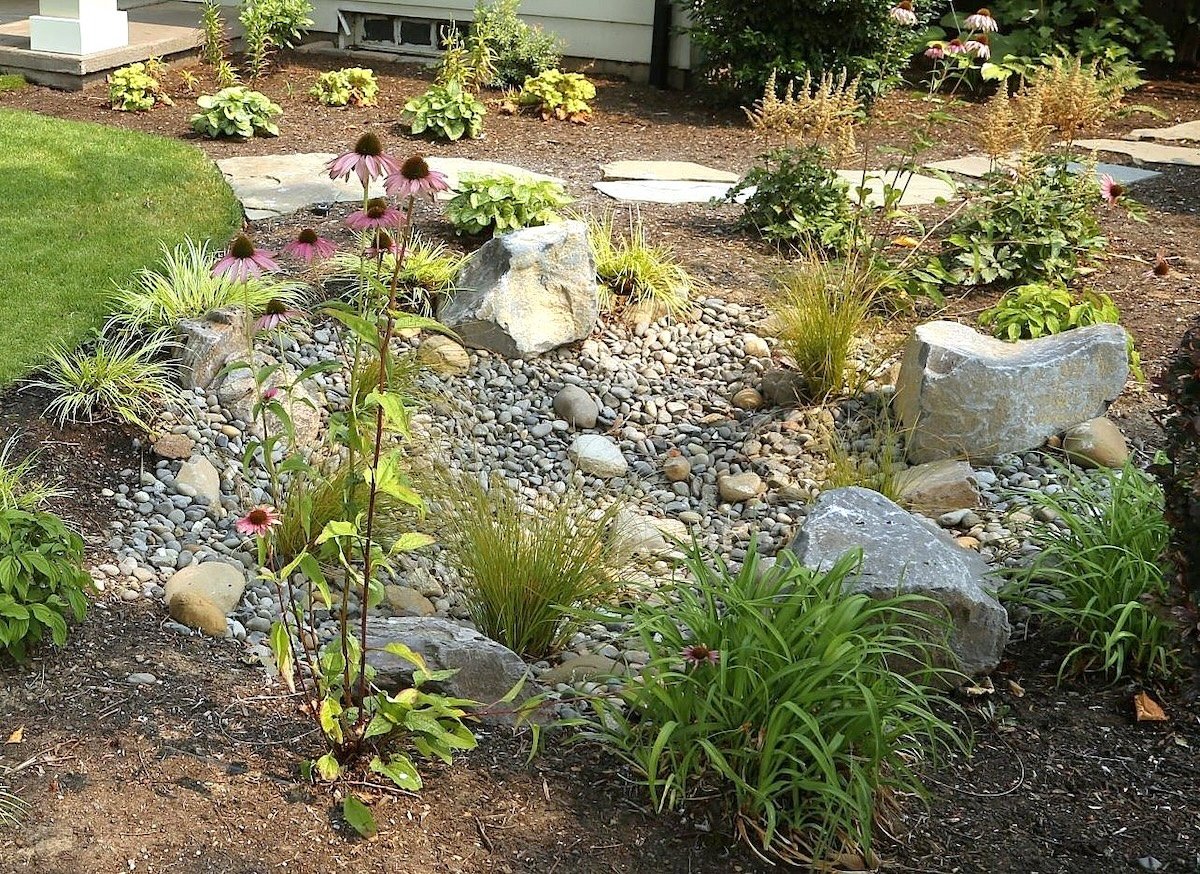
Rain gardens capture and filter stormwater from roofs and hard surfaces, reducing runoff and preventing erosion. They also help recharge groundwater and support pollinators.
Explore Xeriscaping
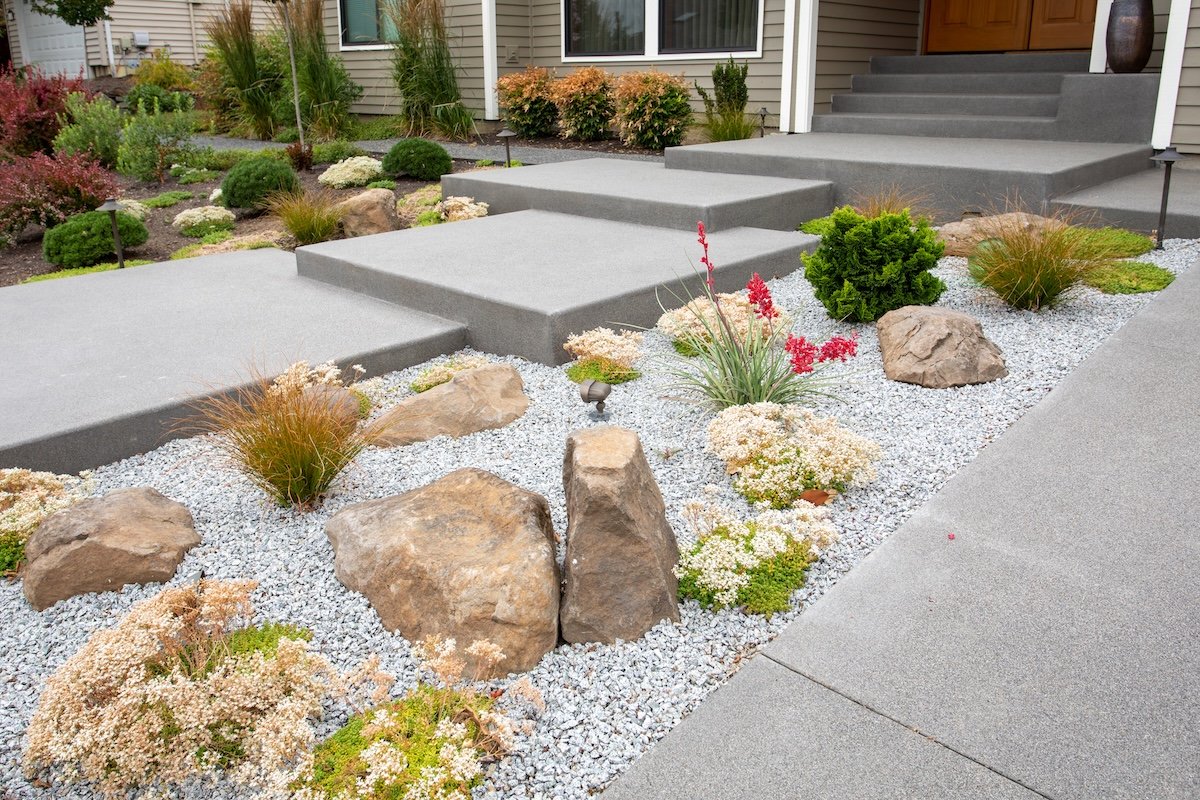
Xeriscaping—designing landscapes that require minimal irrigation—is especially effective for sunny, south-facing yards. To learn more about how xeriscaping supports climate resilience, see our article on Xeriscaping and Climate Change.
Reduce Lawn Area
Lawns are one of the thirstiest landscape features. Reducing turf areas or switching to eco-lawns can significantly cut water use and maintenance needs. Check out these lawn alternatives.
3. Use Recycled and Sustainable Materials
Sustainable materials reduce environmental impact and help conserve resources.
Where to Use Recycled Materials
- Pathways & patios: Reclaimed brick, recycled concrete, reused stone, existing materials
- Mulch: Local arborist chips, recycled wood mulch
- Garden structures: Reclaimed lumber for raised beds or seating
- Hardscapes: Recycled composite decking, permeable pavers
Choosing recycled or upcycled elements not only lowers your carbon footprint, it also gives your landscape character and a sense of place.
4. Reduce Fire Risk Near Your Home
As wildfires become more common across the state, Portlanders must think strategically about landscape fire risk. The City of Portland provides guidelines for reducing wildfire hazards near homes, and many are simple to incorporate into your yard.
Fire-Resistant Plant Choices
Fire-resistant plants are often high in moisture and low in resin. Good options include:
- Sedums
- Mock orange
- Oregon grape
- Red osier dogwood
- Many native ferns
Create Defensible Space
- Keep vegetation trimmed and well-maintained.
- Remove dead branches, dry leaves, and ladder fuels.
- Space shrubs and trees so they don’t create continuous fuel paths.
- Use non-combustible materials, like gravel or stone, near structures.
These practices help protect your home while still maintaining an attractive, natural look. More Firewise landscaping tips here.
5. Promote Soil Health
Healthy soil is the backbone of sustainable landscapes. It retains water more effectively, resists erosion, and supports thriving plant life.
Mulching
A thick layer of organic mulch:
- Reduces evaporation
- Moderates soil temperature
- Suppresses weeds
- Adds slow-release nutrients
Composting
Incorporating compost improves soil structure and boosts organic matter, critical in Portland’s clay-heavy soils.
Biochar for Water-Holding and Resilience
Biochar increases soil carbon, enhances water retention, and improves nutrient availability, making it an excellent amendment for climate-adaptive gardens.
For more soil-boosting strategies, see our article on Natural Solutions for Soil Health and Erosion.
Count On Landscaping Pros
Designing a climate-resilient landscape requires thoughtful planning, from selecting the right plants to engineering proper drainage and irrigation. Professional landscapers can help:
- Assess your site’s microclimates and soil conditions
- Recommend native and climate-adapted plants
- Design stormwater solutions and rain gardens
- Install efficient irrigation systems
- Source sustainable materials
- Create a cohesive design that meets both aesthetic and ecological goals
At Blessing Landscapes, we specialize in eco-friendly, sustainable landscape design tailored to Portland’s evolving climate. Whether you’re converting a lawn to a native garden, installing a rainwater system, or rethinking your entire property layout, our team can help you build a landscape that looks beautiful today and remains resilient for decades to come.
Build a Sustainable Landscape for Portland’s Future
Climate change presents real challenges, but it also offers an opportunity to create landscapes that are more vibrant, more efficient, and more connected to the natural rhythms of the Pacific Northwest.
Ready to design a beautiful, sustainable landscape that thrives in Portland’s changing climate?
Contact Blessing Landscapes today at 503-284-3557 and let’s build a resilient future together.